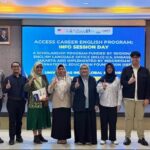


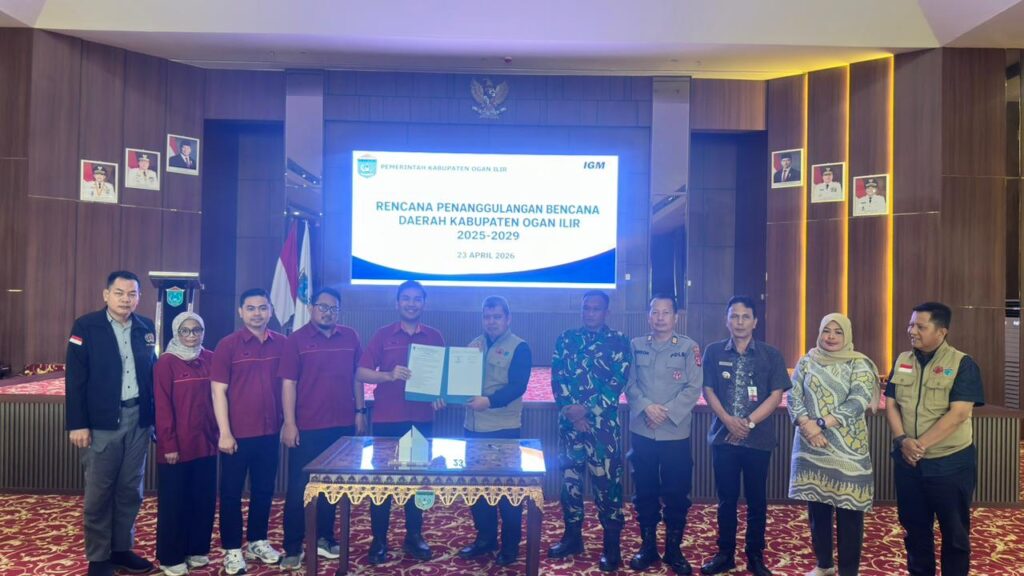
Universitas Indo Global Mandiri (UIGM) has been appointed as a Document Drafting Partner by the Regional Disaster Management Agency (BPBD) of Ogan Ilir Regency.
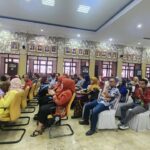
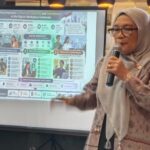
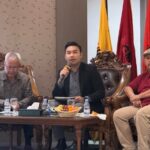
During the Public Consultation Forum (FKP) to draft the Disaster Management Plan (RPB) for the 2025–2029 period, held on Thursday (23 April), Universitas IGM collaborated with the local government in formulating a comprehensive, risk-based planning document to address the region’s geographical challenges.
The Head of the Drafting Team from Universitas IGM, Dr Ir Endy Agustian, S.T., M.Eng., IPP, stated that the drafting of this RPB utilises a risk-informed development approach that integrates risk information into development plans.
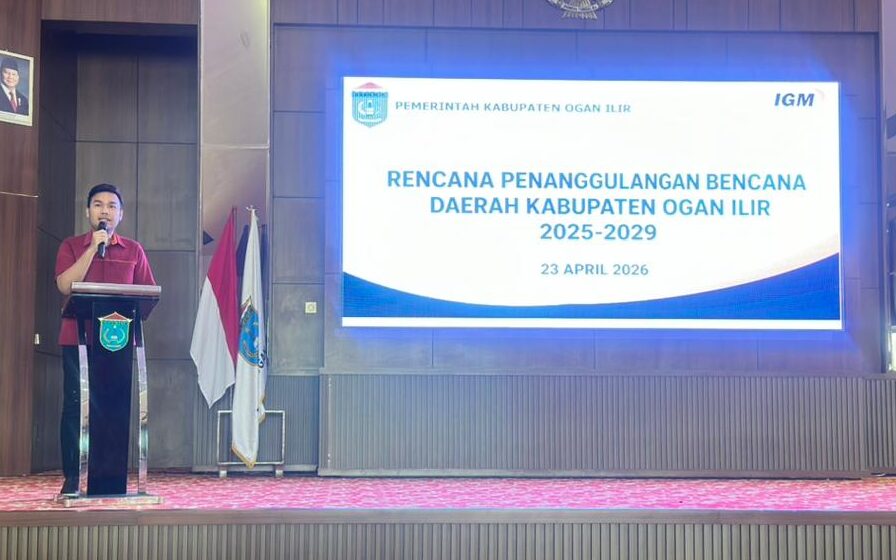
According to him, the characteristics of Ogan Ilir—which is dominated by swampland and low-lying areas—make the region particularly vulnerable to river hydrological dynamics. This document has formulated a mitigation strategy covering strategic issues, disaster-resilient development targets, and cross-sectoral work programmes that can be effectively implemented on the ground.
“Integrating risk data into local policies will ensure that development is not disrupted by the impact of unforeseen disasters,” he said.
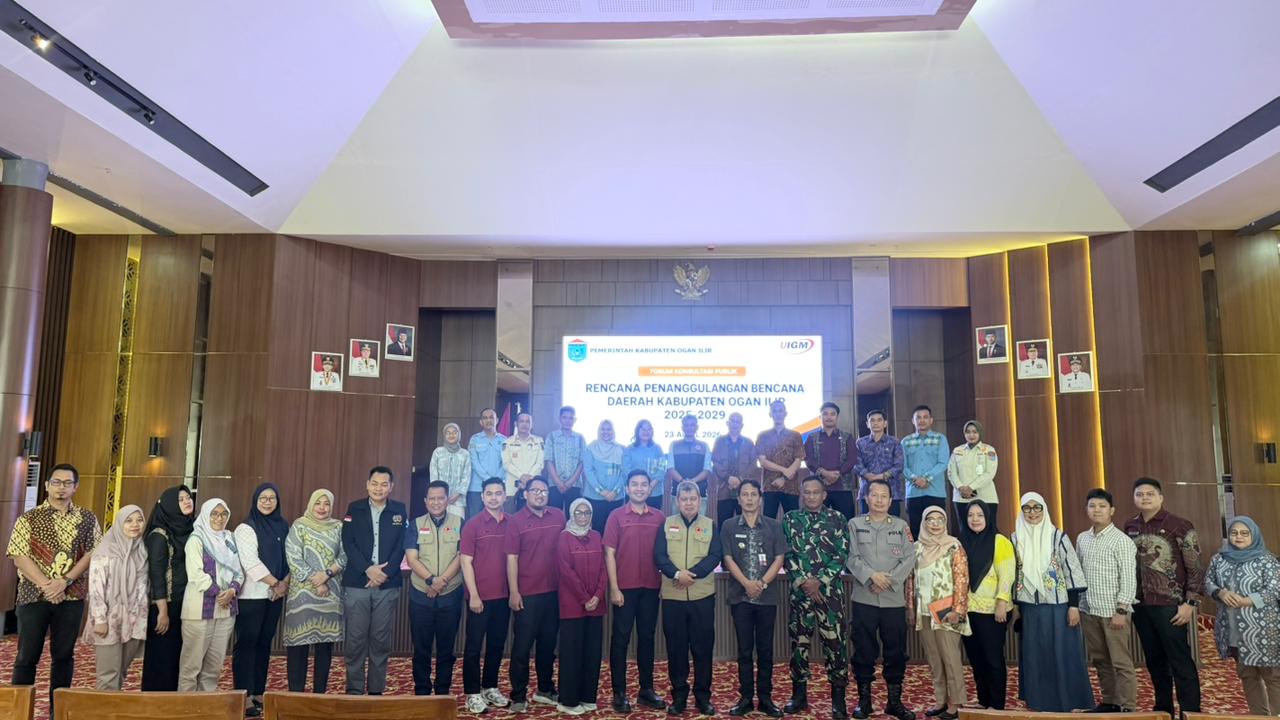
In technical terms, the team of experts identified four key disaster priorities in Ogan Ilir Regency: flooding, drought, forest and land fires (karhutla), and extreme weather.
Endy is not alone. He is joined by a team of experts from the UIGM Geomatics Engineering Department, comprising members of the UIGM Geomatics Engineering Study Programme: Ahmad Ridho Sastra, S.T., M.Eng, Johan Aryantoni, S.T., M.Eng, and Al Shida Natul, S.T., M.Eng.
He emphasised that the use of spatial mapping is crucial for accurately determining priority areas for intervention. With valid spatial data, government interventions are expected to be more targeted, effective, and efficient in minimising the impact of losses on both the community and regional infrastructure.
“The accuracy of coordinate data in the field is key to ensuring that all aid and embankment construction is directed to the areas where it is most needed,” he concluded. (andhiko ta)