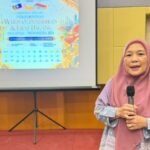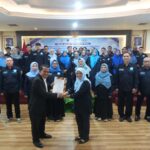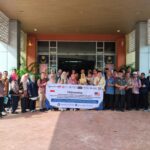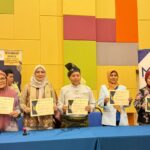


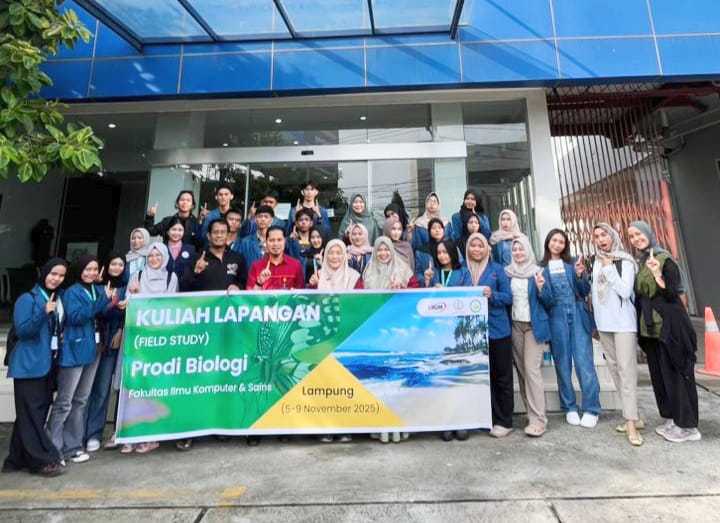
Students from the Biology Study Program at Indo Global Mandiri University (UIGM) conducted a field study in Lampung Province.
Over five days, they visited various important ecosystems, including the Green Valley Tourism Park, Muara Suak Beach, Ptengoran Mangrove Forest, Sanggar Beach, and Gita Persada Butterfly Park.
According to the Vice Rector III of Indo Global Mandiri University, Dr. Dr. Tien Yustini, M.Si, this activity was not just a scientific tour, but a tangible form of higher education’s contribution to sustainable development goals (SDGs), integrating direct learning from nature with global sustainability issues.
In this activity, students not only learn to observe but also directly experience the relationship between humans and the environment.
From fauna interactions, mangrove conservation, to the preservation of tropical butterflies, every aspect of the environment becomes a valuable learning medium. This field lecture is a means of experiential learning, where students develop scientific skills, critical thinking, and sensitivity to environmental issues, in line with SDG 4 – Quality Education
Observations at Muara Suak Beach and Sanggar Beach introduced students to the importance of maintaining coastal and marine health. They learned about mangrove ecosystems and marine fauna that play an important role in absorbing carbon, preventing abrasion, and providing habitat for marine life. This activity directly supports SDG 14 – Life Below Water.
“Through direct observation on the coast, we understand how vital it is to maintain the health of the sea and coast for the sustainability of life on earth,” he said.
Activities in the Ptengoran Mangrove Forest and Gita Persada Butterfly Park further raise awareness of the importance of preserving terrestrial biodiversity, supporting SDG 15 – Life on Land. Students identified vegetation, observed fauna, and learned about the role of conservation. Education in the mangrove area also highlighted how mangrove forests are important natural carbon sinks (blue carbon) for climate change mitigation, in line with SDG 13 – Climate Action. This field lecture also involved collaboration between the campus, conservation area managers, and local communities, serving as a concrete example of SDG 17 – Partnerships for the Goals.
“More than just an academic practice, UIGM Biology field studies instill values of care, empathy, and ecological responsibility in students, where every detail of nature becomes a valuable lesson about the interconnectedness of life on earth,” he concluded. (andhiko ta)