

The never-sleeping screens of mobile devices have become a place where young people seek entertainment, news, and even discussion partners. Behind that convenience lies an algorithm that constantly suggests the next thing to watch—and not all of those suggestions are safe.
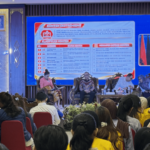
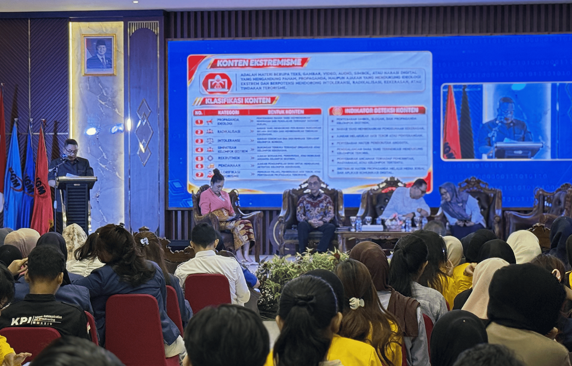
This concern was highlighted during a public discussion titled “Beware of the Threats of Extremist Algorithms and the Digital Space” held in the 12th-floor auditorium at Universitas Indo Global Mandiri (IGM) in Palembang on Monday (November 16).
This event was organized by Universitas IGM in collaboration with the Ministry of Communication and Digital Affairs (Komdigi). Speakers included representatives from the central government, counterterrorism agencies, law enforcement, and academia.
Among them were Dr. Alexander Sabar, S.I.K., M.H., Director General of Digital Space Oversight at Komdigi RI; Dr. Isabella, S.Ip., M.Si., Head of the Assessment and Research Division at the South Sumatra Terrorism Prevention Coordination Forum (FKPT); Head of the South Sumatra Regional Task Force for the National Police’s Densus 88 Anti-Terrorism Unit, Benny Kusworo, S.I.K., M.H.; and a representative from the South Sumatra Regional Police, M. Surahuati, M.H. The Rector of Universitas IGM, H. Marzuki Alie, served as the keynote speaker.
In his presentation, Alexander Sabar began with a question that also served as the title of one of his topics: What should Gen Z do to avoid being exposed to radicalism?
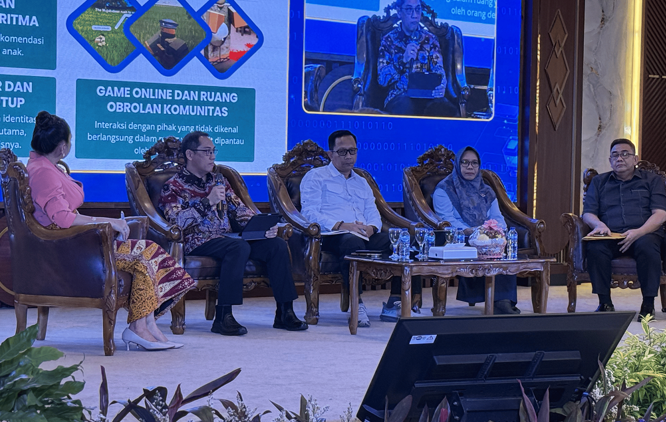
According to him, Gen Z has grown up alongside the internet and social media, so they are very exposed to a flow of information that isn’t always true or beneficial. In the digital space, radical ideologies can emerge in the form of provocation, hate speech, or incitement to violence.
He noted that these traps rarely present themselves in an overtly menacing manner. Content that targets emotions—such as anger, a sense of injustice, and feelings of alienation—is, in fact, more often packaged using familiar language and engaging visuals.
Therefore, Alexander outlined six steps that the younger generation can take, ranging from being critical and discerning; broadening their sources of information; practicing digital safety; engaging in open dialogue; reporting harmful content; and creating positive content.
“To that end, let’s become smart, critical, and safe digital users who actively spread positive content,” he said.
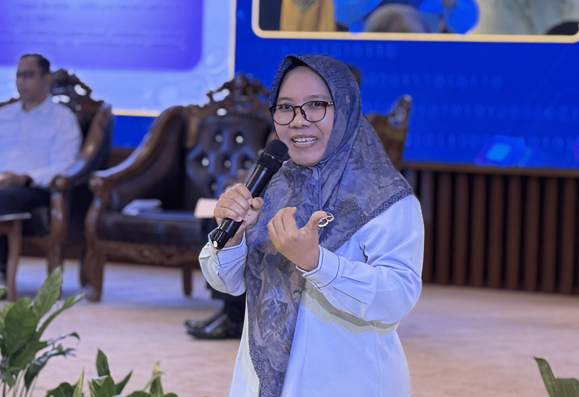
Dr. Isabella from FKPT South Sumatra offered a broader framework. She outlined four pillars of digital literacy that she believes the public needs to possess: digital skills, digital ethics, digital security, and digital culture.
Isabella began by reminding the audience that advances in digital technology bring both convenience and risks to everyday life. Therefore, the public needs to be equipped with digital literacy that focuses not only on technical skills but also on attitudes, awareness, and national values.
“Algorithms have neither good nor bad intentions. They simply present what keeps us watching the longest. If we don’t understand that, we’re the ones who will be controlled,” she concluded. (andhiko ta)